
Water main repair and replacement
When a wet spot in the yard turns into a sinkhole, the failed water main underneath is the cheap part. We dig in, run a new supply, and don’t leave until a pressure gauge says the line will hold.
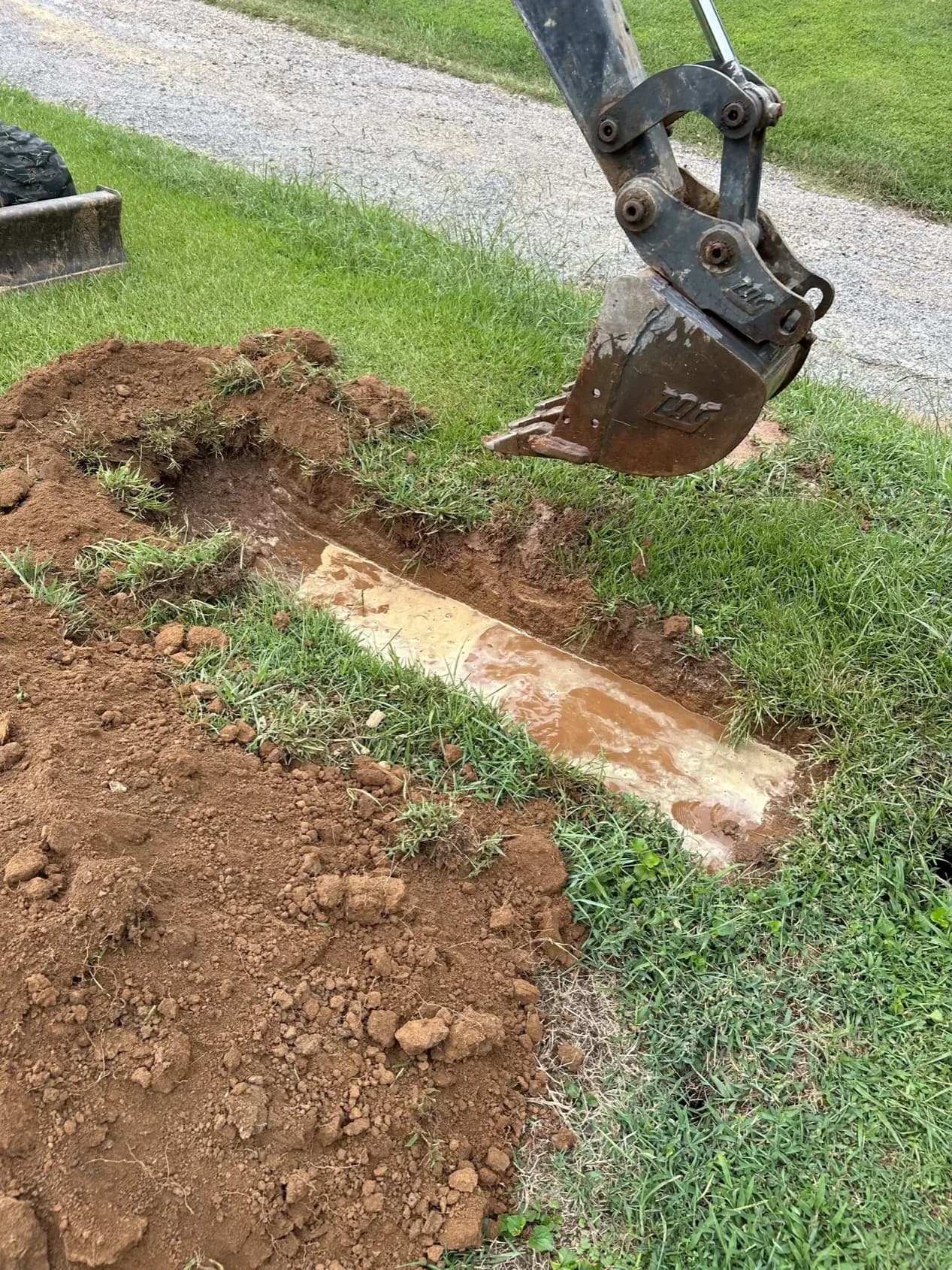
What the work involves.
The water main on most Northwest Georgia houses is the line that runs from the city’s curb stop, across the yard, and into the foundation. On well-water homes it’s the line from the pump to the house. Either way, it sits buried and pressurized, and it stays out of sight until something forces it into view: a wet spot in the lawn, a water bill that doesn’t make sense, pressure dropping inside the house for no obvious reason.
Most of the failures we dig up are old white polyethylene pipe from the eighties and nineties that’s reached the end of its life. The pipe gets brittle, cracks along the bottom, and starts leaking under the lawn for weeks before the homeowner notices. By the time the call comes in, soil has washed out from under the line and a soft sinkhole is opening up. The fix is the same in either case: trench the run, pull the failed section, run a new continuous PEX-A or HDPE supply, and pressure-test the line on a gauge before we backfill.
Every main line job starts with a walk of the yard to find the leak, identify the run, mark the utilities, and quote a clear price before any equipment turns. We don’t leave the site until a gauge on the system reads full house pressure. That number is the closing argument that the work actually held.
What we handle.
The jobs we handle most often. If yours isn’t on the list, give us a call and ask.
Underground leak detection
When you can see water at the curb or a wet spot in the yard but can’t see the line, we find the leak before we dig. Meter-side isolation tests, pressure-drop checks, and ground-probe inspections narrow the location down before any sod or concrete comes up.
Full water main replacement
Service line from the curb stop or meter all the way back to the house. We trench in, pull the failed line, run a new PEX-A or HDPE supply as one continuous length, pressure-test the run, and backfill.
Service line spot repair
When the failure is localized (a single split, a damaged section from a third-party dig, or a freeze burst at a shallow spot), we expose just the bad piece, cut out the failed section, and tie in a new run with the right fittings for the pipe material on either side.
Service line upsizing
Older 3/4-inch supply lines often choke off pressure when a newer house with three bathrooms and a tankless heater is asking for more water than the line can carry. We upsize to 1-inch or larger on replacement, sized to the household’s peak demand, not just matching what was there before.
Whole-house shutoff replacement
The valve where the supply enters the house. Old gate valves seize after a decade of not being touched, which means the next time you need to kill water in a hurry, you can't. We replace with full-port ball valves so the shutoff actually works when you need it.
Static pressure testing on the supply
When pressure is dropping or fluctuating, we hook a calibrated gauge to a hose bib and read what the city or the pump is actually delivering. Spike testing catches nighttime peaks. The data tells us whether the problem is the main, the PRV, or something downstream.
Freeze-burst supply repair
In a hard cold snap, shallow supply lines and exposed shutoffs split. We expose the burst section, cut out the failed run, and tie in a fresh length. If the failure is from a line set shallower than frost depth, we re-bed and re-bury at the right depth so the next cold snap doesn’t reach it.
Meter-side diagnostics
When the meter dial is moving but every fixture in the house is shut off, the leak is somewhere between the meter and the house, and your water bill is paying for it. We isolate at the meter, work backward toward the house, and confirm where the loss is happening before we cut.
Recent work.
A few water mains jobs we wrapped recently. Each one is a full write-up of the problem, what we did, and how it turned out.
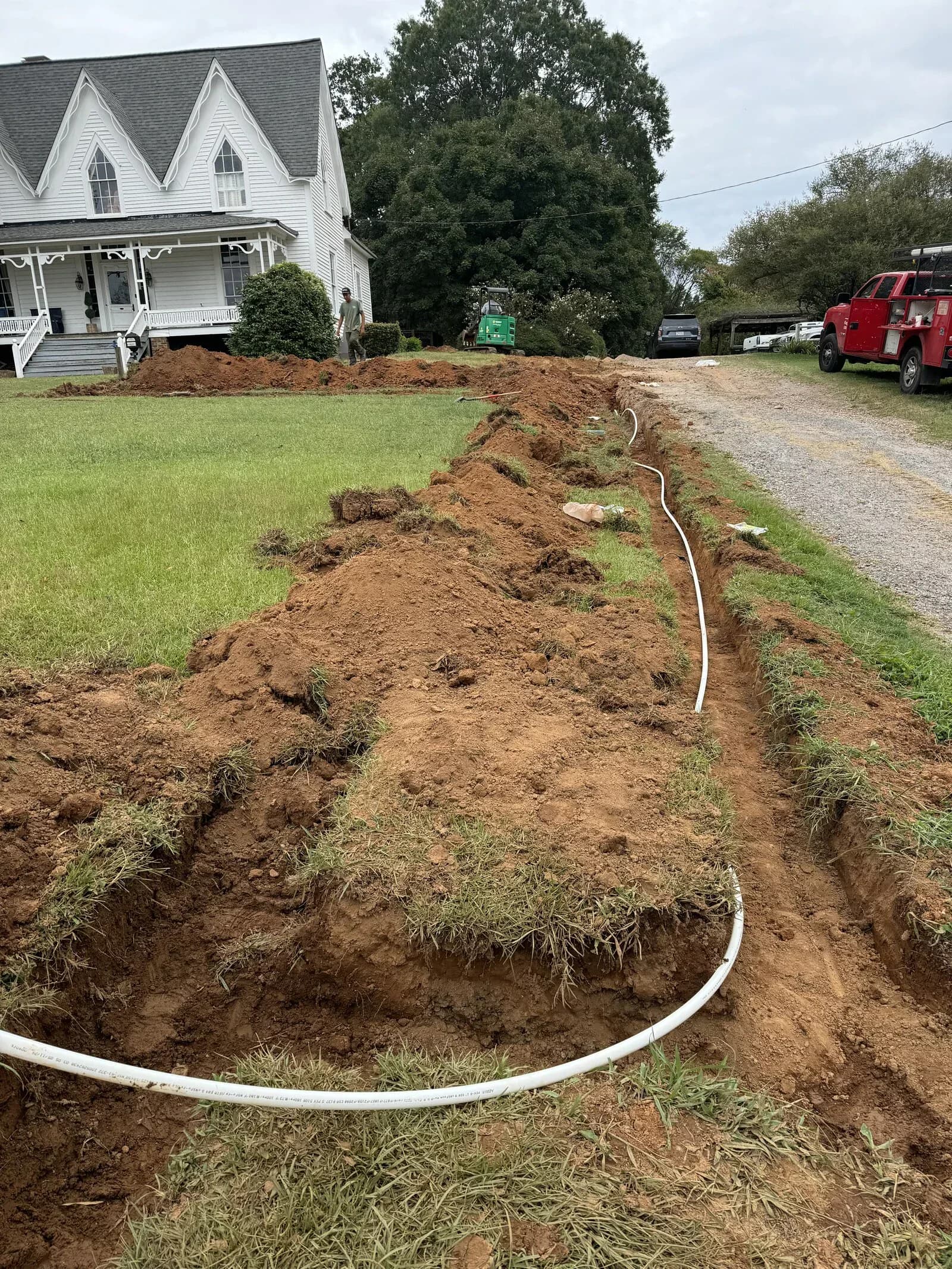
A rotted-through main line, replaced end to end
A failing main line had been pushing water into the front yard for weeks. We dug across the lawn, pulled the old pipe, ran a fresh line, and got the house back to spec the same day.
Read the full story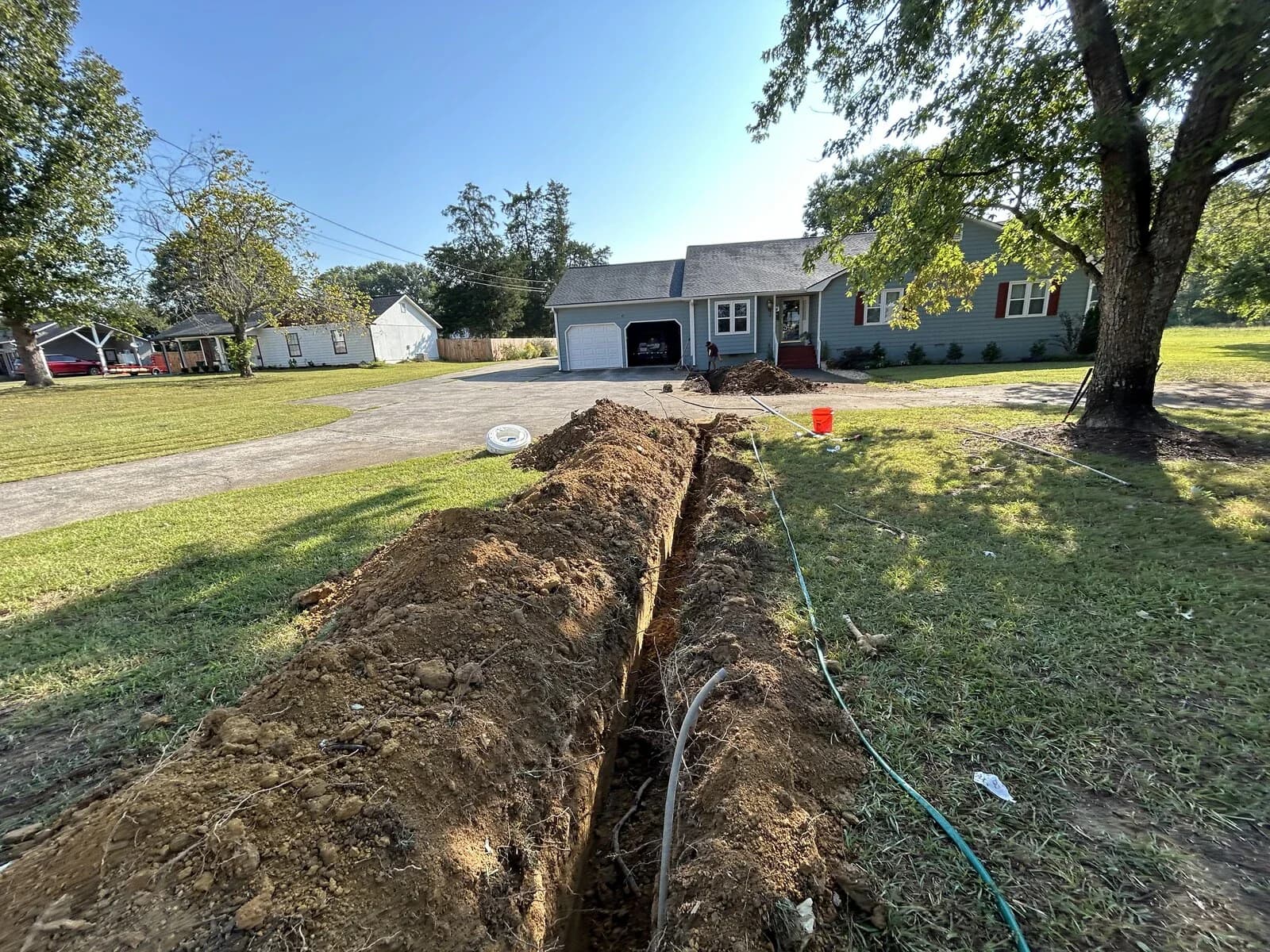
A buried water main, replaced before the driveway gave way
Active water bubbling up from a pit by the curb meant the main was leaking under the driveway slab. We trenched in, pulled the failed section, ran a new line, and proved the pressure on a gauge before we packed up.
Read the full story
The supply line and what sits on it.
A water main isn’t just a length of pipe. There’s the curb stop, the meter, the whole-house shutoff inside the house, and a handful of valves and fittings that keep the system serviceable for the next decade. We work on all of them.
Curb stop valves
The shutoff at the property line, usually in a buried meter pit or box. Old corp-cock valves seize and round off. We swap for modern quarter-turn versions so the line can actually be isolated for service.
Meter pit risers and lids
When the pit is sunk, broken, or buried over, the meter reader can’t access it and you can’t isolate the line. We raise the riser, replace cracked lids, and bring the pit back up to the correct grade.
Whole-house ball valves
Full-port quarter-turn ball valves at the point of entry into the house. Replace decades-old gate or globe valves that seize shut and stop working as a shutoff long before they leak.
Pressure tanks (well-side homes)
On well water, the bladder tank between the pump and the supply line buffers the pressure cycles. When the bladder fails, the pump short-cycles itself to death. We service, recharge, or replace.
Pressure switches and well controls
Cut-in and cut-out switches that tell the well pump when to run. Replace failed switches, adjust setpoints to match the house demand, and verify with a gauge.
Backflow preventers at the entry point
Reduced-pressure or double-check assemblies where required by code: irrigation tees off the supply, water-fed boilers, livestock troughs. Stops contamination from siphoning back into potable water.
Tracer wire and warning tape
Every buried supply line we run gets a continuous tracer wire alongside the pipe and warning tape a foot above. So the next plumber, electrician, or landscaper has a locator signal and a colored tape to hit before the shovel reaches the line.
Sleeves and conduits across hard surfaces
Where the supply has to cross a driveway, patio, or slab, we sleeve it in a larger conduit. If the inner line ever needs to be pulled in the future, the slab doesn’t come up. The new pipe gets pulled through the sleeve.
How we do the work.
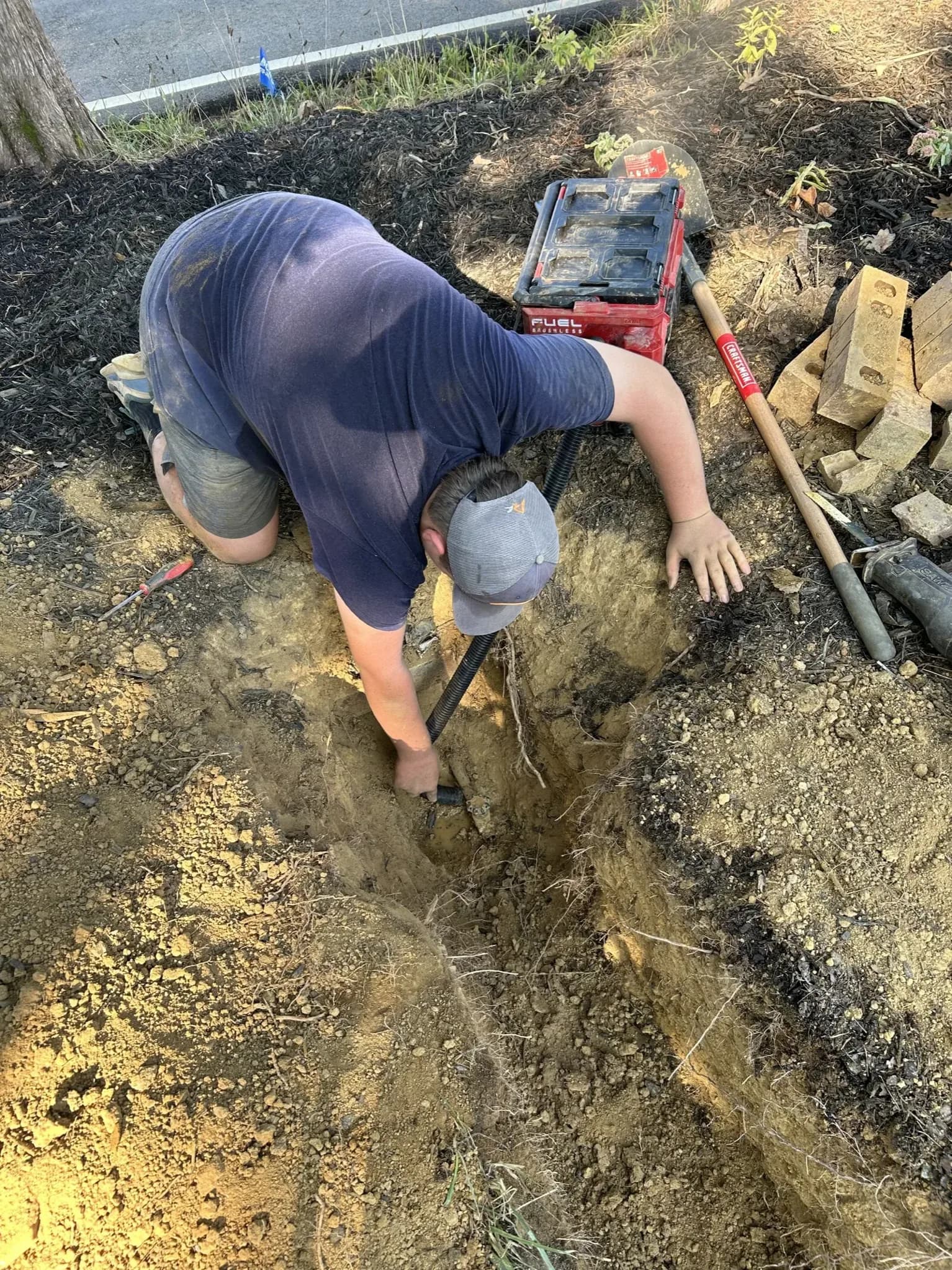
PEX-A and HDPE supply pipe
Modern polyethylene supply lines (PEX-A or HDPE depending on the run and the burial conditions) outperform the legacy white polyethylene and galvanized steel by decades. We pull the new line in as one continuous length, with no buried joints in the trench where they can’t be inspected later.
Lead-free brass at the connections
Connections at the curb stop and the whole-house shutoff use lead-free brass compression or barb fittings rated for buried potable-water service. Mechanical joints stay above ground at the meter pit and the house entry, not buried mid-run.
Locate, mark, and hand-dig at crossings
Mini-excavator for the long run, hand-dig at every utility crossing: gas, electric, telecom, and any irrigation we know about. Before any cut, we mark the run, check 811 locates, and confirm what’s underground.
Pressure testing before backfill
Every replacement gets a static pressure test before any soil goes back in the trench. Hold the line at house pressure, walk the trench, confirm no joint is weeping. The number on the gauge is the closing argument that the line will hold.
Sand bedding and clean backfill
Sand or pea gravel under and around the pipe, no sharp rock against the line. Native soil compacted in lifts above. The line gets buried to or below the local frost depth so the next cold snap doesn’t reach it.
Tracer wire and warning tape
Continuous tracer wire run alongside the pipe and surface-locatable from the ends. Warning tape buried a foot above the line. So the next dig, yours or ours, finds the signal first and the colored tape before the shovel reaches the pipe.
When to give us a call.
If any of these are happening, you’ve likely got a leak between the curb and the house. The longer it sits, the more soil washes out from under the line and the more it costs to put the yard back together when we’re done. Catching it early keeps the dig smaller and the cleanup easier.
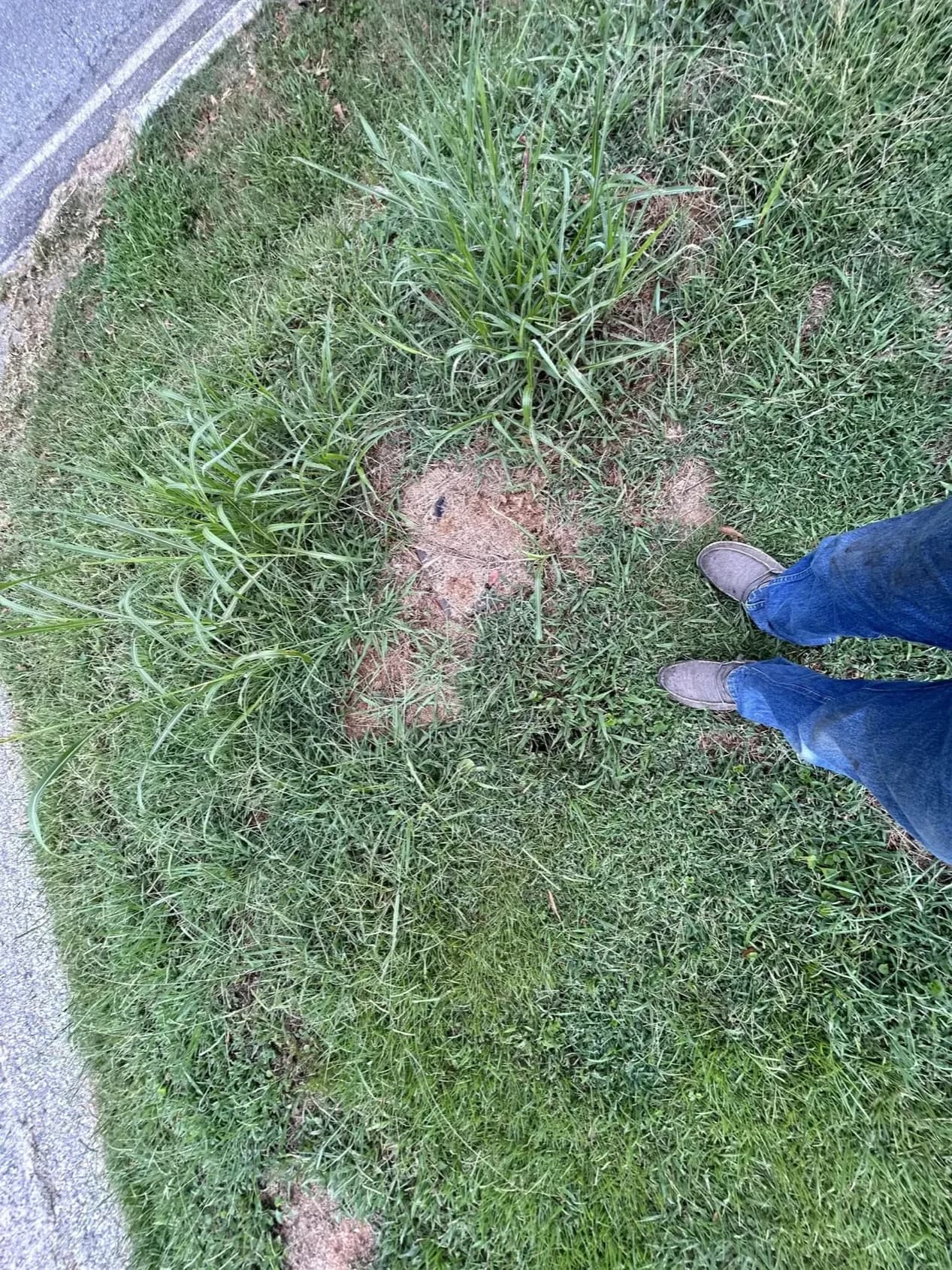
- A wet spot in the yard that won’t dry up, especially between the meter and the house
- Water bubbling up at the curb, in the meter pit, or near the foundation
- A soft sinkhole or settling strip running from the meter toward the house
- House pressure dropping for no obvious reason, even with the PRV in spec
- A water bill that climbed without your usage changing
- Unusually lush green grass or moss in a strip pointing at the house
- The meter dial moving when every fixture in the house is shut off
- Pressure that reads strong at the meter but weak once it reaches the house
Common questions.
Wet spot in the yard? Give us a call.
Main line jobs are the kind that get worse the longer they sit. Phone is the fastest way to reach us.