
Water heater install, repair, and replacement
When the shower runs cold, you want a straight answer first. We troubleshoot before we sell, then handle tank, tankless, and hybrid heat-pump installs across Northwest Georgia.
What the work involves.
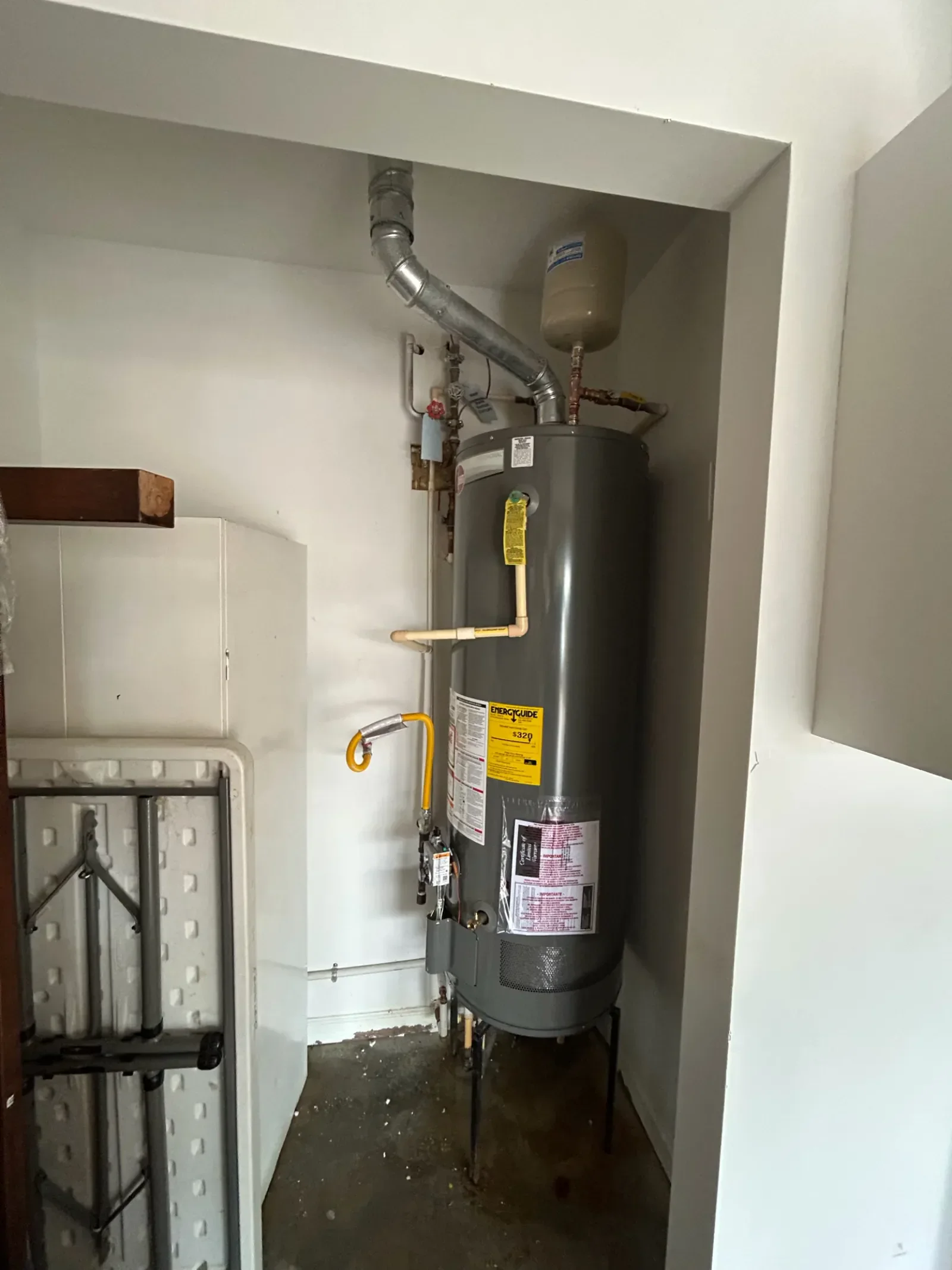
A water heater is one of those things you don’t think about until the morning shower runs cold. When that happens, you want a straight answer and a working tank back in the house. We carry common tank sizes on the truck for standard replacements, and we handle tankless and hybrid heat-pump installs when the house is set up for them.
Not every failing water heater needs to be replaced. A bad element, a stuck T&P valve, a thermocouple that won’t stay lit. Those are usually a parts-and-an-hour fix. We troubleshoot before we sell. If it’s at the end of its life, we tell you, and we tell you why. If it has a few good years left, we tell you that too.
What we handle.
The jobs we handle most often. If yours isn’t on the list, give us a call and ask.
Tank water heater replacements
Forty, fifty, and seventy-five gallon gas and electric. We pull the old one, set the new one, replace the flex lines and shutoffs, and bring the venting up to current code.
Tankless water heater installs
When a tankless fits the house (gas supply, vent path, and hot-water demand all line up), we run the gas, vent the unit properly, and tie in the supply and condensate drain. Indoor or outdoor mount, sized to your peak GPM.
Repairs and diagnostics
Failed elements, bad thermocouples, leaking T&P valves, pilot light issues, tripping breakers. We troubleshoot before we replace. Sometimes the fix is a hundred dollars instead of a thousand.
Sediment flushing and maintenance
An annual flush keeps sediment from baking onto the bottom of the tank, where it kills efficiency and shortens the heater’s life. We can put you on a yearly reminder if it’s something you’d rather not track.
Expansion tank installs
When a water heater gets replaced on a closed system (most homes with a PRV on the main), an expansion tank is required by code. We install it correctly, sized to the heater capacity, and tie it into the existing copper.
T&P relief valve replacement
The temperature and pressure relief valve is the safety device that keeps the tank from becoming a problem. We replace it on every new install and swap it out when an existing one is dripping or stuck.
Hot water recirculation systems
Cuts the wait for hot water at the far fixture and the water that runs down the drain while you’re waiting. We install dedicated-return systems on new construction and on-demand pump systems on existing homes.
Hybrid heat-pump water heaters
High-efficiency electric units that pull heat from the surrounding air. Real upfront cost, but real long-term savings on the electric bill, and they qualify for federal and Georgia rebates that are worth running through.
Water heaters and systems we install.
From a standard tank swap to a tankless or heat-pump install that takes more planning.
Standard gas tank (40, 50, 75 gallon)
Atmospheric-vent or direct-vent depending on what the install location supports. The everyday workhorse for most Northwest Georgia homes.
Standard electric tank (40, 50, 80 gallon)
Element-and-thermostat tank for homes without gas service or where electric makes more sense. Sized to the household’s peak draw, not just what was there before.
Tankless gas (whole-house)
Indoor or outdoor mount, condensing or non-condensing. Sized in GPM at your local groundwater temperature so the unit can actually deliver what’s on the spec sheet.
Hybrid heat-pump tank
High-efficiency electric units that move heat instead of generating it. Need a location with enough air volume and a condensate drain, and they qualify for federal energy rebates.
Power-vent and direct-vent installs
For installs in tight spaces or where the chimney is no longer usable. We handle the venting kit, the condensate path, and the dedicated outlet.
Point-of-use electric tank
Small under-sink, garage, or addition water heaters where running hot supply from the main heater doesn’t pencil out.
Recirculation pumps and dedicated returns
On-demand and timed recirc systems for homes where the kitchen or master bath is a long run from the heater.
Expansion tanks and thermal expansion control
Sized to the water heater capacity and the home’s supply pressure. Required on closed systems and a smart add on any replacement.
How we do the work.
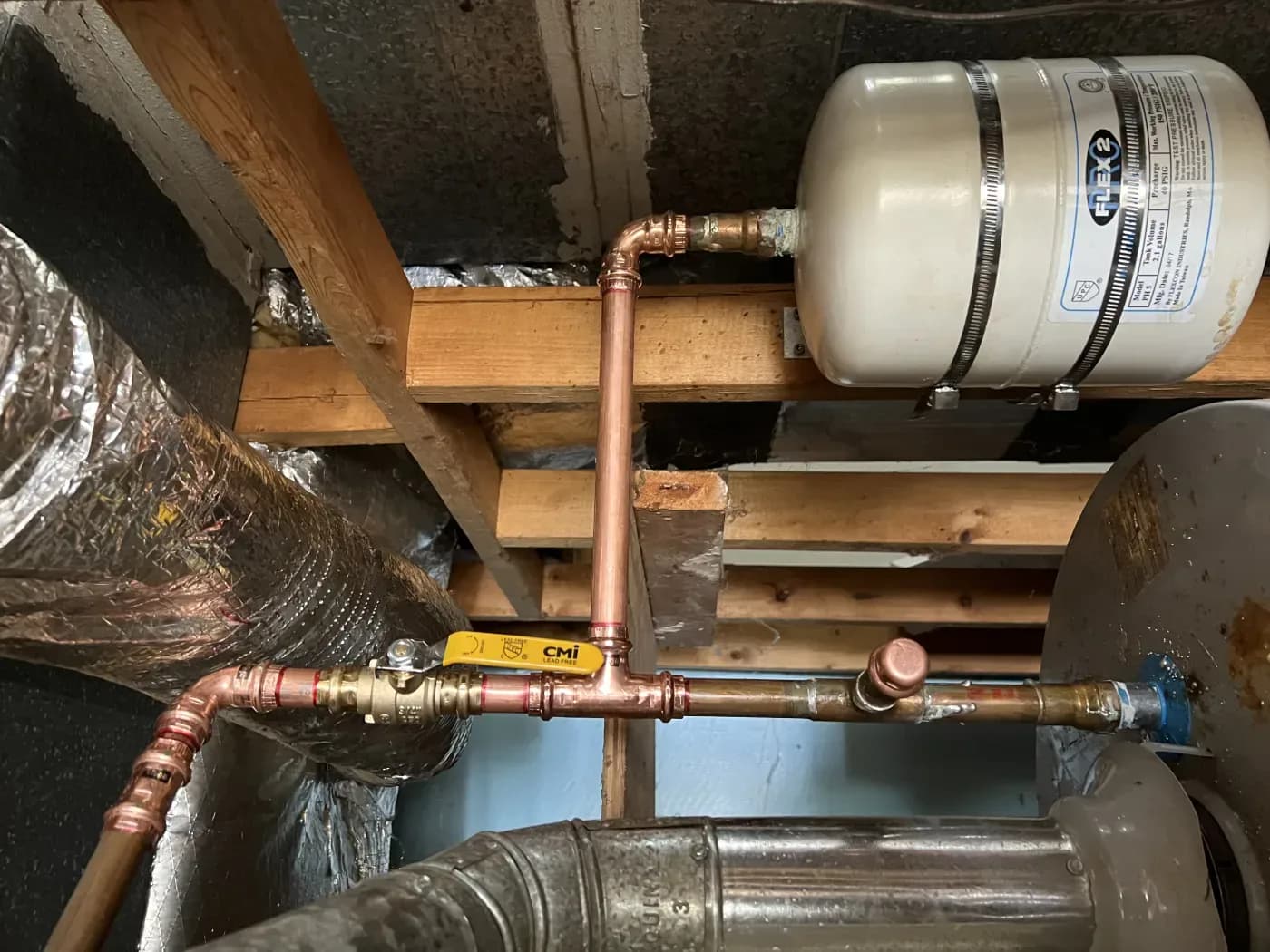
Dielectric unions
Galvanic-isolation unions between copper supply and the steel tank nipples. Stops the corrosion that kills the connections long before the tank itself fails.
Expansion tank, sized to capacity
Sized to the water heater gallon count and the home’s static pressure. Wrong-size expansion tanks fail early and let pressure spike at every heat cycle.
Factory-set T&P relief valve
Temperature and pressure relief is the safety on a water heater. We install a new factory-set valve on every replacement, never a reused one, and run the discharge to a safe location.
Heat-trap nipples
Built into the hot and cold connections on new water heaters to reduce convective heat loss. We replace plain nipples with heat-trap nipples when a tank that lacks them gets serviced.
Drip pan and code-compliant drain
A pan under any indoor-installed tank with a drain routed to a safe location. Cheap insurance against a slow leak turning into a flooded floor.
Annual sediment flush
Sediment cooks onto the bottom of the tank over time, insulating the burner or element from the water above it. An annual flush adds years of life and protects efficiency.
When to give us a call.
If you’re seeing any of these, give us a call sooner rather than later. Catching it early keeps the fix simpler.
- No hot water at all (pilot out on a gas unit, breaker tripped or element failed on electric)
- Hot water runs out faster than it used to
- Lukewarm water from the hot tap that should be hot
- Rusty or discolored water at the hot tap (but the cold runs clear)
- Banging, popping, or rumbling sounds when the heater is running
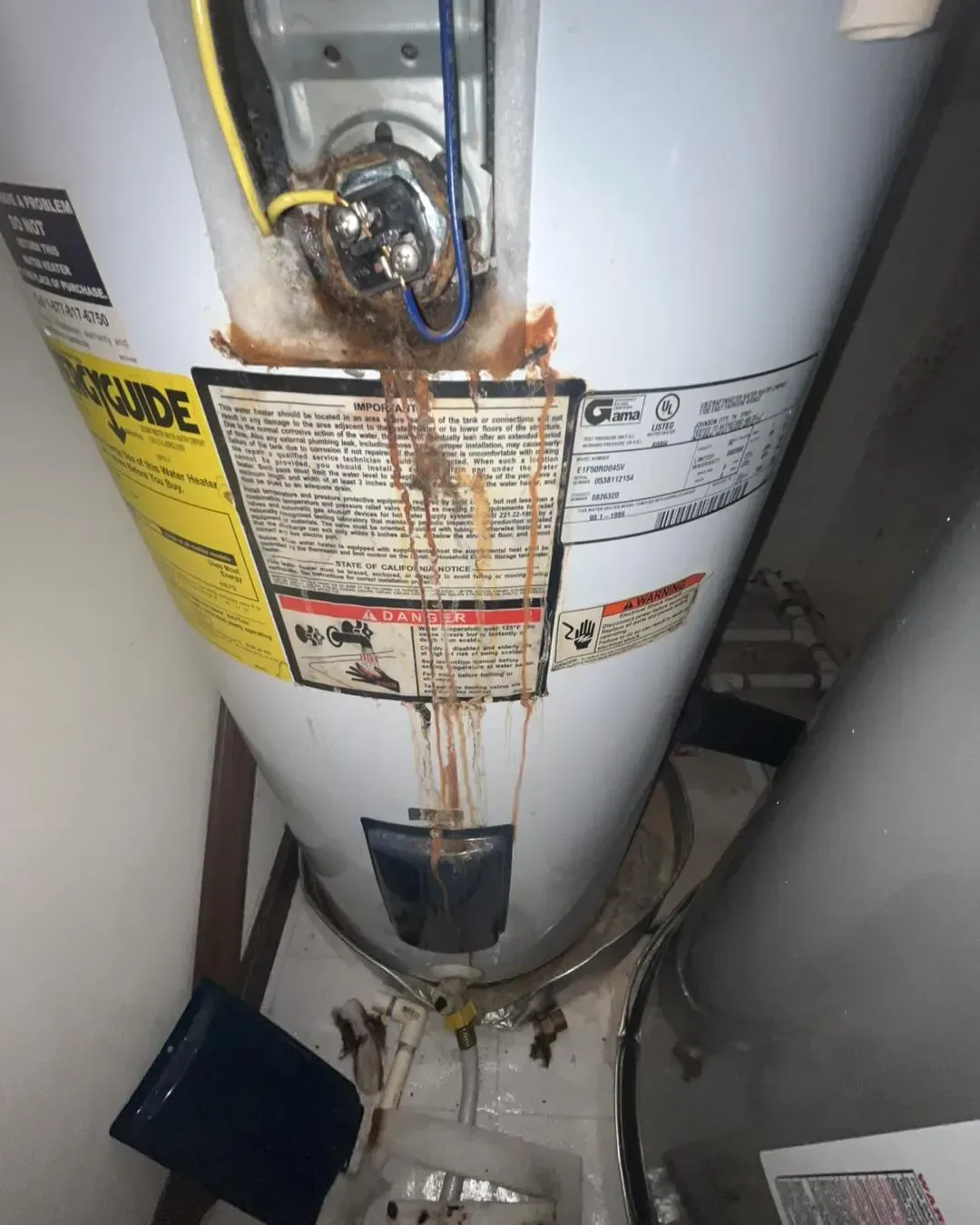
- Standing water on the floor around the base of the heater
- The heater is more than ten or twelve years old and the anode rod has never been changed
- Visible corrosion or rust on the inlet, outlet, or T&P valve connections
Common questions.
No hot water? Give us a call.
Phone is the fastest way to reach us. We carry standard tank sizes on the truck, which keeps tank-for-tank swaps moving once we get eyes on the install.