
Pressure reducing valve (PRV) replacement
When the pipes bang every time a faucet shuts off, the PRV at your main is usually the culprit. We measure the pressure, set the new valve to spec, and verify with a calibrated gauge before we leave.
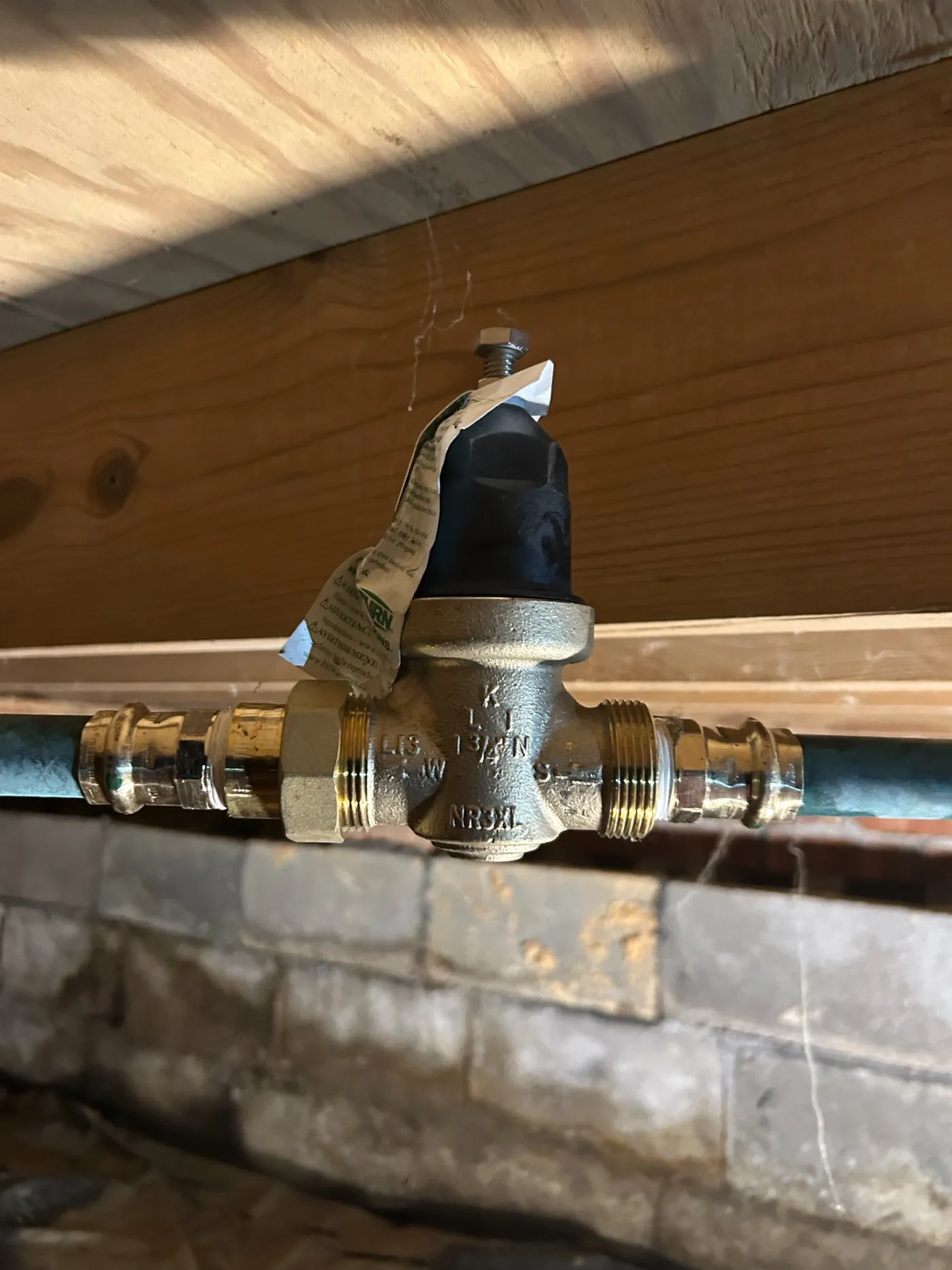
What the work involves.
City water in Rome and the surrounding counties can come in at 100 PSI or higher in places. Most residential plumbing (supply lines, toilet fill valves, faucet cartridges, washing machine hoses) is rated for 60 to 80 PSI. The pressure-reducing valve at your main is the part that brings the pressure down to where it belongs.
When a PRV fails, it usually fails open. Pressure climbs. You start hearing pipes bang when a fixture closes. Toilet fill valves drip. The water heater’s T&P relief starts releasing. Supply lines to toilets and washing machines pop without warning. Every fixture in the house is taking the abuse of a system it wasn’t designed for.
Every PRV job starts with a pressure reading at a hose bib so we know what the city is actually delivering and what the existing valve is doing. We size the replacement to the household’s peak demand, set the outlet pressure to spec, and verify with a gauge before we leave. If the house doesn’t have an expansion tank at the water heater (or has one that’s lost its precharge), we handle that on the same visit.
What we handle.
The jobs we handle most often. If yours isn’t on the list, give us a call and ask.
PRV replacement
Old valve out, new lead-free brass body in. We tie back into the existing copper or PEX, set the outlet pressure to the household’s spec, and verify with a calibrated gauge.
New PRV installs
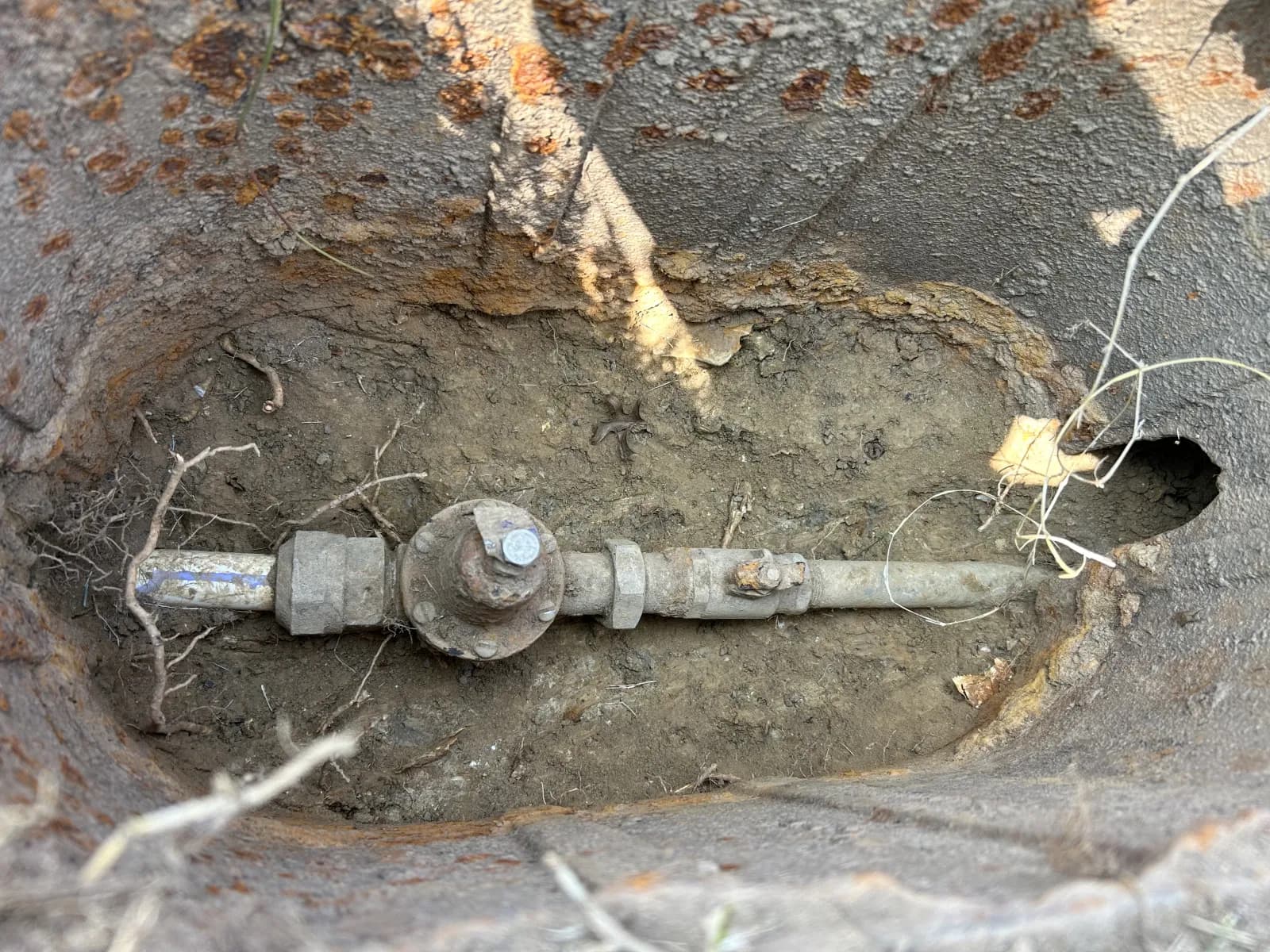
For houses that never had one (older homes pre-dating local code) or houses that need the existing PRV moved to a more accessible location. Usually at the main shutoff inside the house or in the meter pit.
Static pressure testing and diagnosis
When something feels off, we hook a calibrated gauge to a hose bib and read what the city is actually delivering. Spike testing catches the nighttime pressure surges that average daytime gauges miss.
PRV and expansion tank combination
A PRV makes the household supply a closed system. Thermal expansion at the water heater has to go somewhere, and the expansion tank is what catches it. We size and install one if it’s missing or if the existing tank has lost its precharge.
Adjustable PRV tuning
Adjustable PRVs come from the factory set near the top of the range. We dial the outlet down to where it should sit for the household, lock the adjustment, and verify with a gauge.
Backflow preventer install and replace
Reduced-pressure and double-check assemblies for irrigation, fire suppression, and boiler systems. Required by code on any line that could feed water back into the potable supply.
Lead-free brass PRV upgrades
Older brass PRV bodies pre-dating 2014 contain lead. Current code (NSF/ANSI 372) requires lead-free brass on any new install touching potable water. We swap legacy bodies for lead-free on every replacement.
Whole-house thermal expansion control
When a PRV is on the main, the system is closed and the water heater’s pressure climbs at every heat cycle. Expansion tanks, vacuum relief valves, and thermal-expansion bypass setups handle the pressure correctly.
The PRV and the pressure system around it.
A PRV is the heart of the residential pressure system, but it doesn’t work alone. Here’s what we install alongside it to keep pressure correct, safe, and stable.
Expansion tanks
Sized to the water heater capacity and the system’s static pressure. Required by code on closed systems and a smart add on any PRV install where one is missing.
Inline and test-port pressure gauges
A permanent gauge on the cold side or at the PRV outlet tells you what your pressure actually is, year-round. Test-port gauges work for diagnostic readings on existing systems.
Backflow preventers
Reduced-pressure zone (RPZ) assemblies and double-check valves where irrigation, boiler systems, or chemical feeders could push water back into potable supply.
Whole-house shutoff valves
Older gate valves seize shut after a decade of not being used. We replace them with quarter-turn ball valves so the next emergency shutoff actually works.
Vacuum relief valves
For homes where the water heater sits below the highest fixture. Stops siphoning of hot water out of the tank during a supply interruption.
Hose-bib vacuum breakers
Required by code on hose bibs that could feed a sprinkler, hose, or chemical mixer. Stops contamination from siphoning back into the household supply.
Anti-scald mixing valves
Downstream of the water heater. Tempers the hot output to safe shower temperatures while keeping the tank at a high enough temp to suppress bacteria growth.
Pressure-test ports
A simple Schrader-valve port at the PRV outlet or main shutoff. Lets us (or you) read pressure without disconnecting anything. Worth adding on any new PRV install.
How we do the work.
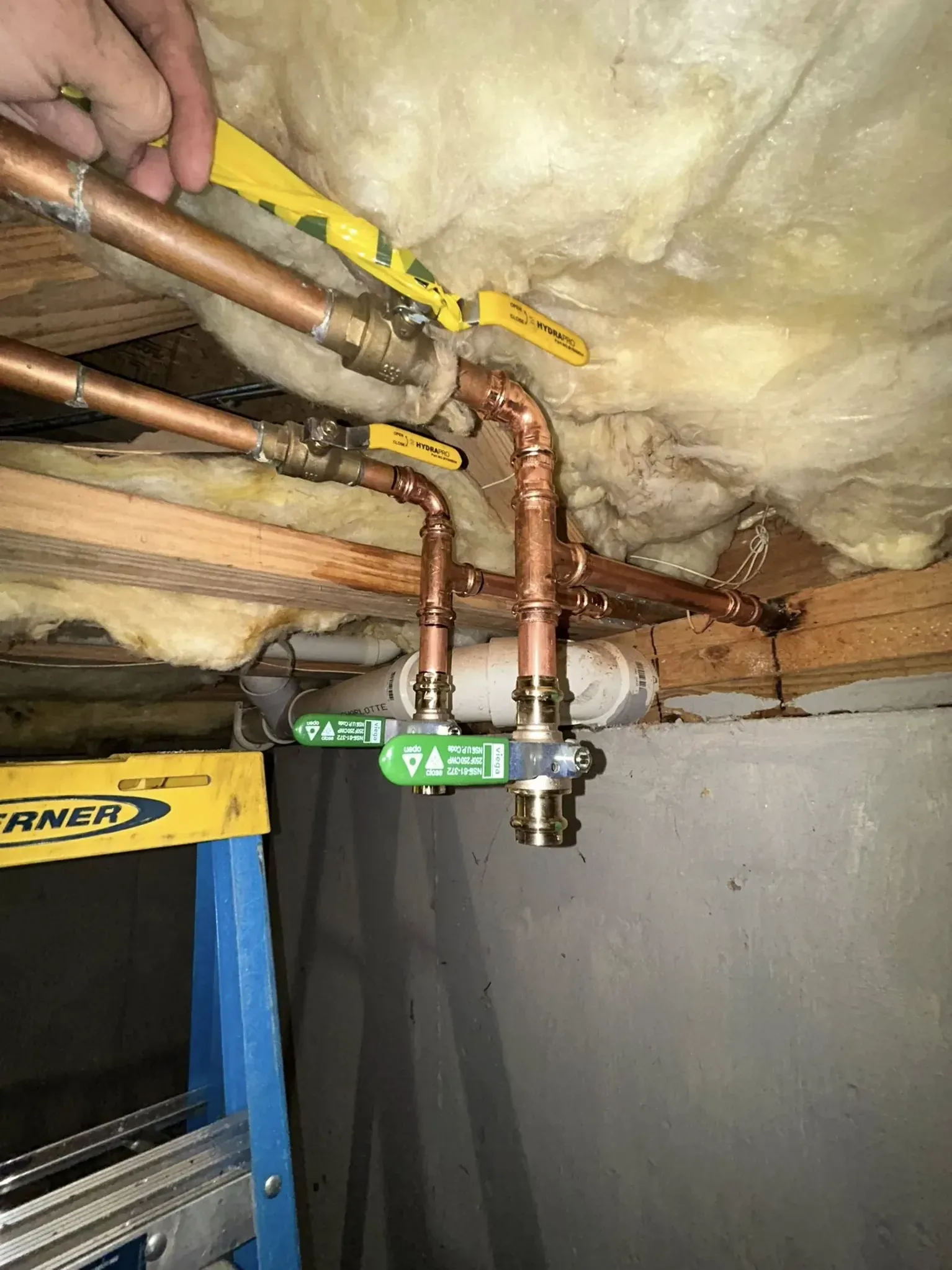
Lead-free brass PRV bodies
Current code (NSF/ANSI 372) requires lead-free brass on any potable-water PRV. We swap legacy bodies for lead-free on every replacement and document the body material on the work order.
Union connections both sides
Union nuts on both inlet and outlet sides of the PRV mean the next swap is two wrenches and twenty minutes, not cutting copper out of a wall. Costs a little more up front, saves a lot at the next replacement.
Strainer plus upstream isolation
Shutoff and strainer assembly upstream of every PRV install. Servicing the valve doesn’t mean killing water to the whole house, and debris from the main doesn’t chew up the inlet seat.
Calibrated pressure gauges
We use NIST-traceable gauges that get verified twice a year. Reading from an out-of-cal gauge means setting the PRV wrong, and a PRV set wrong fails early.
Sizing by household peak demand
PRV sizing comes from household peak GPM and inlet pressure from the meter. We don’t undersize a replacement just because the original was 3/4 inch. If the math calls for a one-inch body, that’s what goes in.
Code-compliant expansion tank
Every PRV install closes the household supply system, which means thermal expansion at the water heater needs somewhere to go. Properly sized, factory-charged to match the static pressure, installed on the cold side.
When to give us a call.
If any of these are happening, the PRV is either failing or wasn’t installed in the first place. Catching it early saves the water heater, the toilets, and most of the small valves downstream.
- Banging or hammering sounds in the walls when a faucet shuts off
- A toilet that runs on its own without anyone using it
- The water heater’s T&P relief valve dripping or releasing periodically
- Supply lines to toilets or washing machines that have ruptured more than once
- Faucet aerators clogging with debris frequently
- Hose bibs spraying violently when first opened
- Sprinkler heads or irrigation valves failing prematurely
- A pressure gauge on the hose bib reading over 80 PSI
Common questions.
Banging pipes? Running toilet? Give us a call.
Phone is the fastest way to reach us. We read the pressure before we quote anything, so the number lines up with what your house is actually dealing with.