Hose bib install, repair, and replacement
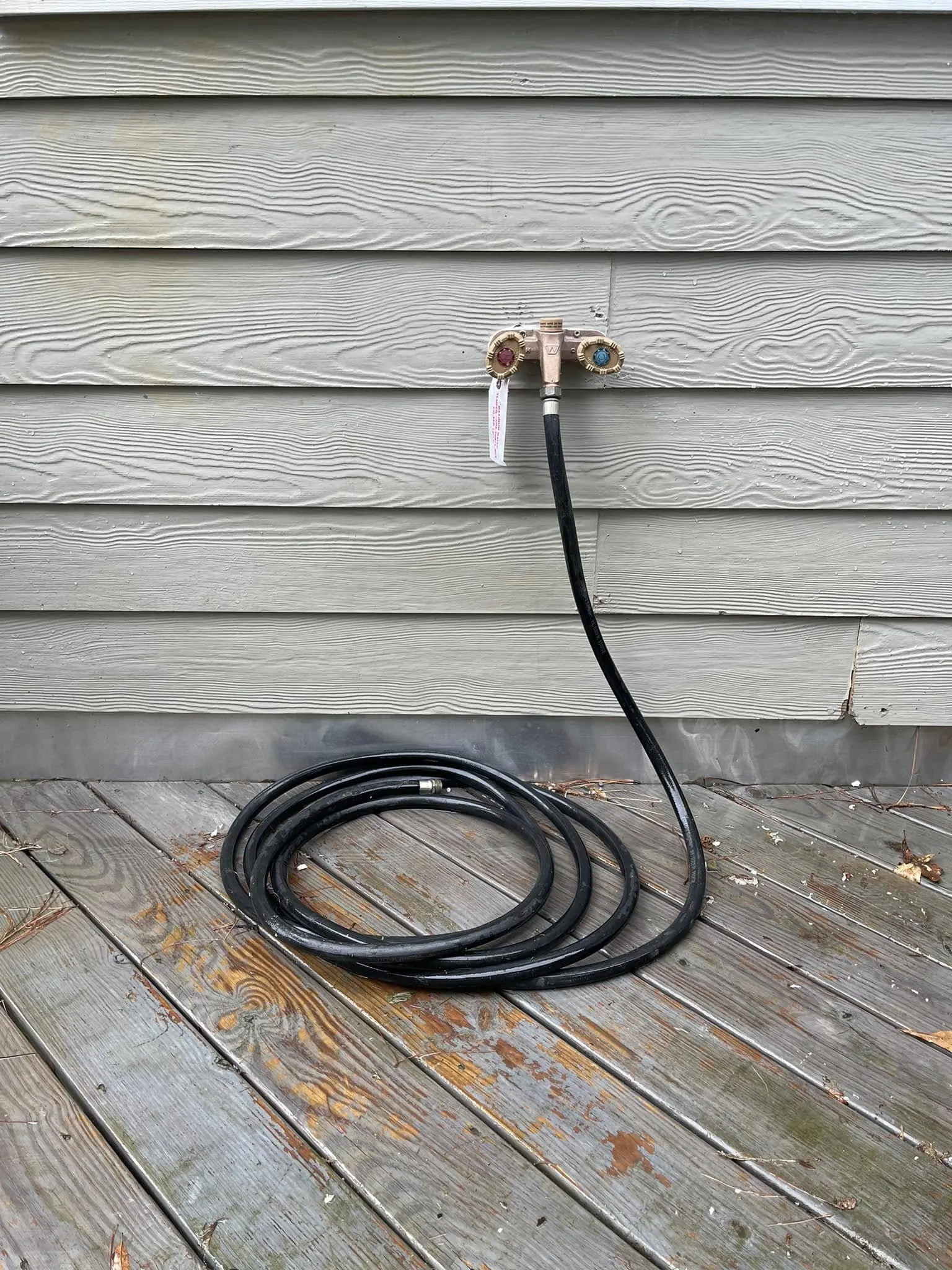
Hose bibs are the primary outdoor water work: we install new ones, replace burst bibs, and upgrade standard to frost-free. We also handle yard hydrants, outdoor showers, and the dedicated runs that feed them.
What the work involves.
Northwest Georgia winters are mild most years, then drop into the teens for a week and break every standard hose bib in the neighborhood. A frost-free hose bib puts the shutoff valve inside the heated wall, where it can’t freeze. We replace burst bibs, add anti-siphon vacuum breakers where code requires them, and upgrade old standard bibs to frost-free before the next cold snap finds them.
Most of our hose bib calls come in February: water in the wall after a freeze, or a bib that split but the homeowner only finds it the next time they hook a hose up. We pull the burst bib, replace it with a frost-free, and add the vacuum breaker on the way back together. If the freeze split open the supply line behind the wall, we get to that too.
Hose bibs are more than the spigot by the back door. We handle yard hydrants, frost-free wall bibs, garden hydrants, outdoor shower supplies, and the dedicated runs that feed irrigation tees. Whether it’s a single bib that finally gave out or a whole-house upgrade before winter, the work is the same: shut off the water, cut out the old, set the new one with the right vacuum breaker, and pressure-test before we wrap.
What we handle.
The jobs we handle most often. If yours isn’t on the list, give us a call and ask.
Frost-free hose bib upgrades
Old standard bib out, frost-free in. The shutoff valve moves back inside the conditioned space (seven to eighteen inches behind the wall face), so there’s no water in the freezing zone when the spigot is closed.
Freeze damage repair
When a bib has split inside the wall, we cut access, repair the line, replace the bib with a frost-free, and put the wall back enough to button up. Documentation provided if you need it for an insurance claim.
Standard hose bib replacement
Brass-body standard hose bib replacement when the homeowner specifically wants like-for-like (or when the supply behind the wall makes a frost-free install impractical). New supply connection, new vacuum breaker, full pressure test.
Anti-siphon vacuum breaker installs
Required by current code on any hose bib that could feed a sprinkler, hose-end mixer, or chemical applicator. We install one on every new bib and check the integrity on every repair call.
Yard hydrant install and repair
Standalone yard hydrants for gardens, livestock waterers, and outbuildings. New installs with the riser buried below the frost line, or field repairs on the plunger and link rod when an existing hydrant stops shutting off.
Outdoor shower bibs
Dedicated hot-and-cold or cold-only supply for an outdoor shower at the pool, the lake house, or the back patio. Frost-free design, proper drain path, and an isolation valve inside the wall for winter shutdown.
Hose bib relocation
Moving an existing bib to a more useful spot (around the corner of the deck, closer to the garden, off the front porch). New supply route through the wall, clean exterior penetration, old hole sealed and patched.
Sillcock and supply line repair
When the bib itself is fine but the connection or short supply leg behind it is leaking, we open the wall, repair or replace what’s failing, and seal the line back up.
Outdoor water components we handle.
Hose bibs are part of a bigger outdoor water system. Here’s what we install and replace alongside them.
Standard residential hose bibs
Brass-body 3/4-inch hose bib for installs where a frost-free isn’t an option. The conventional shutoff-at-the-spigot design that’s been on every house in Northwest Georgia for fifty years.
Frost-free wall hose bibs
Available in 4-, 8-, 12-, and 18-inch stems to match the wall thickness and the heated-side depth. We size to the construction so the shutoff seat ends up in the conditioned space.
Yard hydrants
Vertical post-mounted hydrants for gardens, livestock, and outbuildings. Riser buried below the frost line, drain port at the base for self-draining when shut off.
Wall hydrants (recessed)
Recessed-mount wall hydrants for a clean exterior finish. Common on modern builds where the homeowner wants the bib flush with the siding instead of sticking out.
Anti-siphon vacuum breakers
Code-required on any hose bib that could feed contaminated water back into the supply. We install one on every new bib and replace failed breakers as a standalone repair.
Hose bib dedicated supplies
When a bib is being added in a new location, we route a dedicated cold supply from the closest accessible line, with an interior shutoff for seasonal isolation.
Outdoor shower hardware
Hot-and-cold or cold-only outdoor shower supplies, with the rough roughed for a backboard, a fixture, or a wall-mounted shower head.
Quick-connect garden bib add-ons
Brass quick-connect adapters and Y-splitters at the bib for homeowners running multiple hoses. We install the connection and check the bib seat for any wear that the quick-connect would aggravate.
How we do the work.
Frost-free design (shutoff inside the wall)
Frost-free bibs have the shutoff valve seven to eighteen inches back from the wall face, inside the heated structure. Water in the spigot drains out when you close the valve, so there’s nothing left to freeze.
All-brass body construction
Brass hose bib bodies stand up to freeze cycles way better than plastic-bodied units, and the threads hold up to garden hoses cycling on and off all season. Standard residential cost difference is small, longevity difference is years.
Code-compliant anti-siphon vacuum breakers
Current code requires an anti-siphon vacuum breaker on any hose bib that could feed a sprinkler, hose-end mixer, or chemical applicator. We install one on every new bib.
Sweat-soldered or PEX expansion fittings
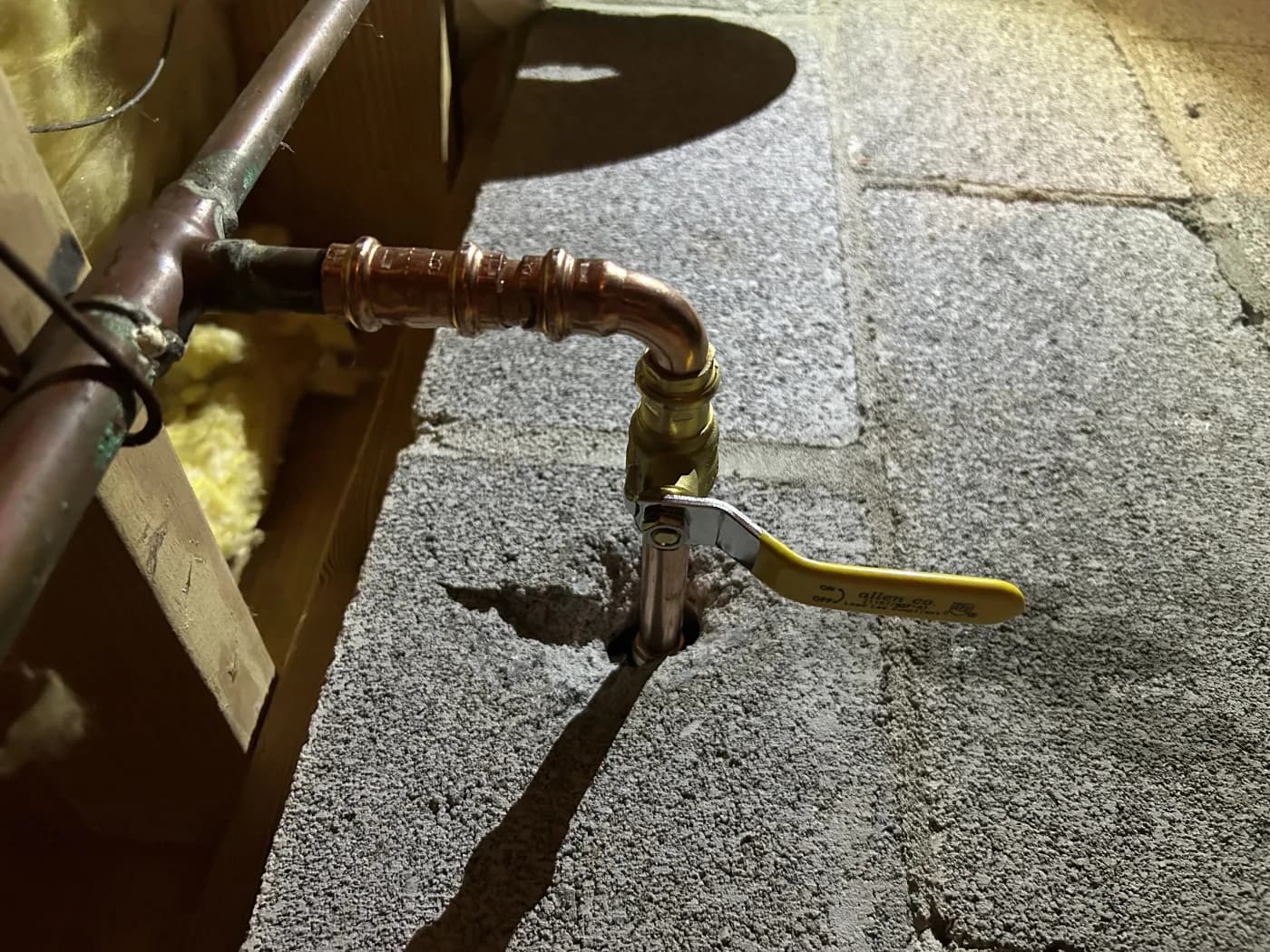
We sweat-solder onto copper supply lines or use PEX expansion fittings depending on what’s behind the wall. Either way, the connection is leak-tested before we close anything up.
Pitched installs that drain
Frost-free bibs are installed with the spigot end pitched slightly downward, so residual water in the tube drains out the front when the valve closes. Installed level or sloping up, the frost-free design doesn’t work.
Insulated supply runs in unconditioned spaces
Where the supply line runs through crawl space, garage wall, or exterior chase, we wrap it with closed-cell foam insulation. Insulation alone won’t save you from a hard freeze, but it’ll save a lot of slow-leak calls in February.
When to give us a call.
Northwest Georgia gets a hard freeze every couple of years, and the hose bibs that haven’t been upgraded are usually what split. If any of these are happening, the bib is failing and water is finding its way somewhere it shouldn't.
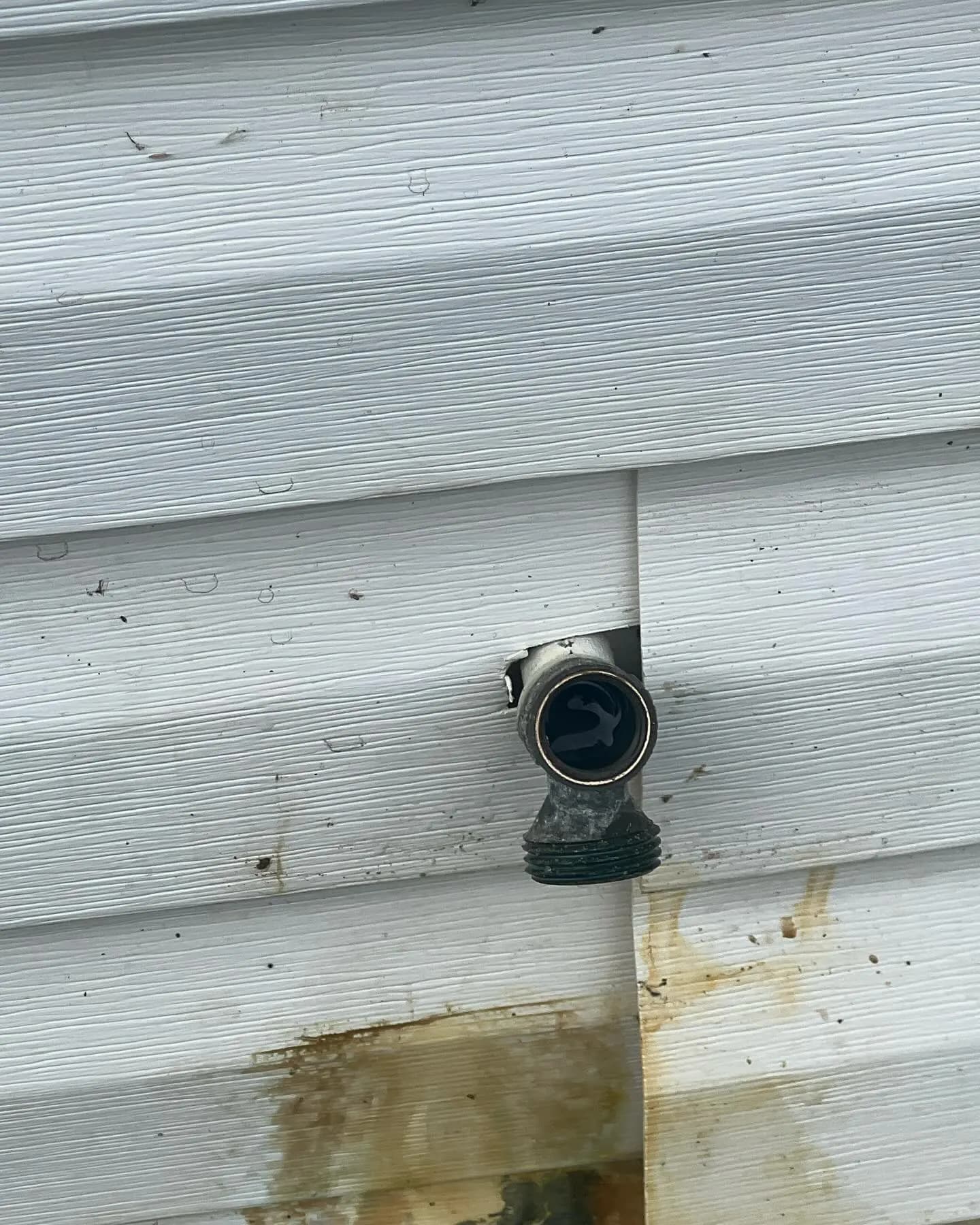
- A hose bib that drips with the hose disconnected
- A hose bib handle that turns but no water comes out
- Water dripping inside the wall or basement after you used an outdoor faucet
- A hose bib that froze last winter and you got lucky
- Low pressure at the outdoor faucet that is not low at the kitchen sink
- Visible split or crack in the bib body, especially after a hard freeze
- A hose bib handle that just spins without engaging the valve
- Water seeping out around the threaded base where the bib enters the wall
Common questions.
Hose bib leaking, or stuck closed? Give us a call.
Phone is the fastest way to reach us. If you’re calling before the cold snap, the upgrade goes on the calendar before the wall does.